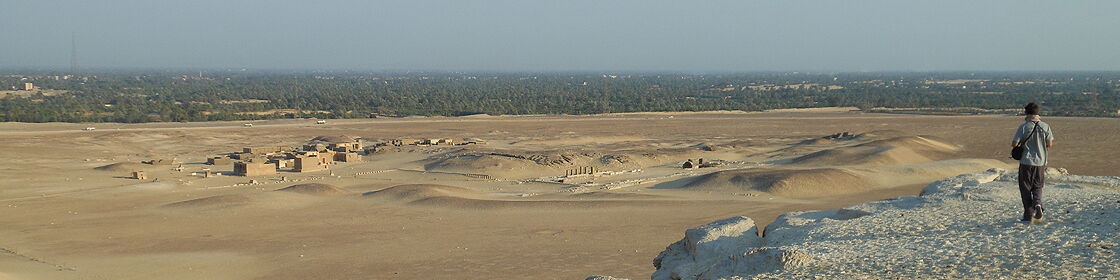
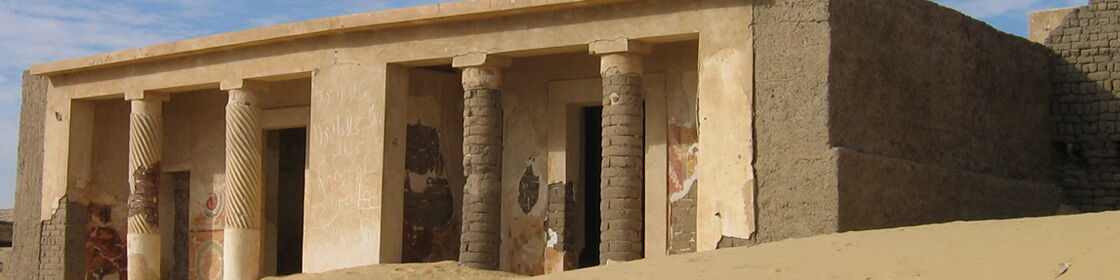
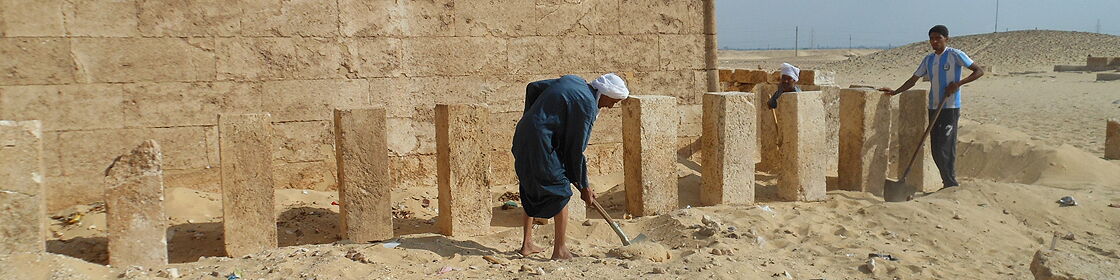
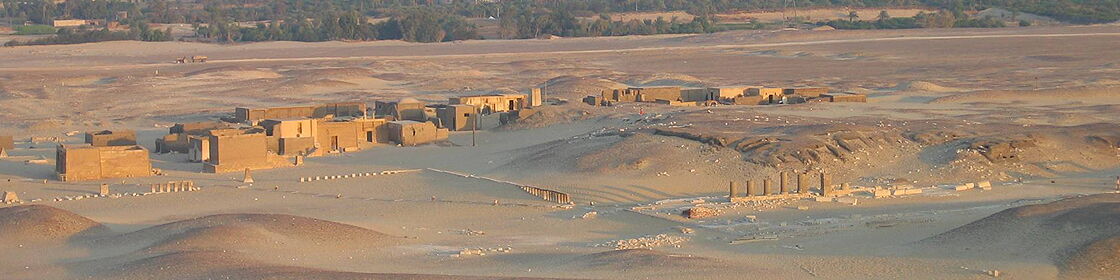
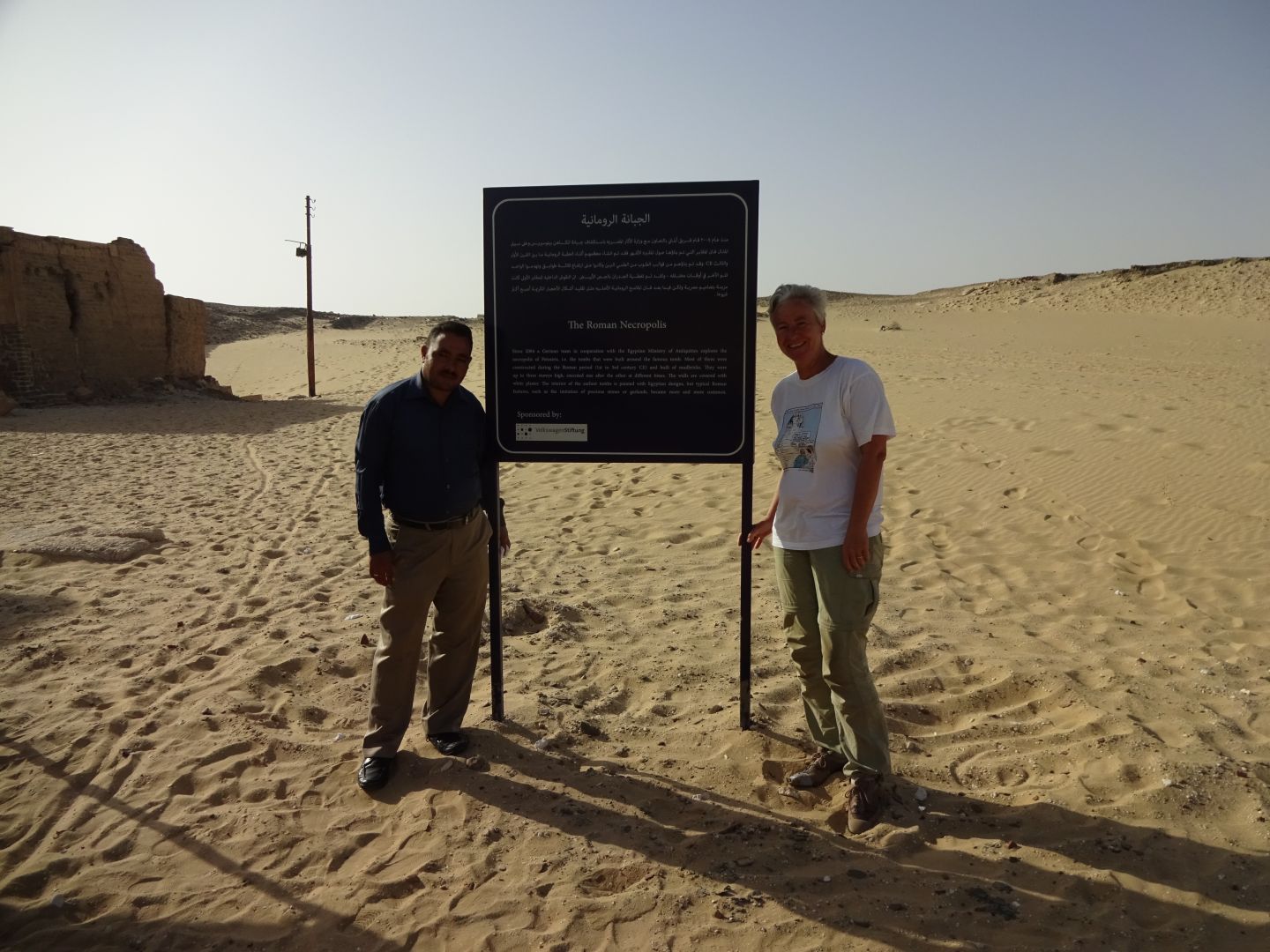
As we consider site management an important task at Tuna el-Gebel, we commissioned an Egyptian company in Cairo to produce four new signs according to our area of research. The four signs are: “Welcome at Tuna el-Gebel” at the entrance gate of the archaeological area, “The tomb of Petosiris” next to the famous tomb, and “The Roman necropolis” and “The tomb of Isidora” next to the tomb house of Isidora. They were placed at the site on October 29th, 2018 by Katja Lembke and Sayed Abdel Malik.
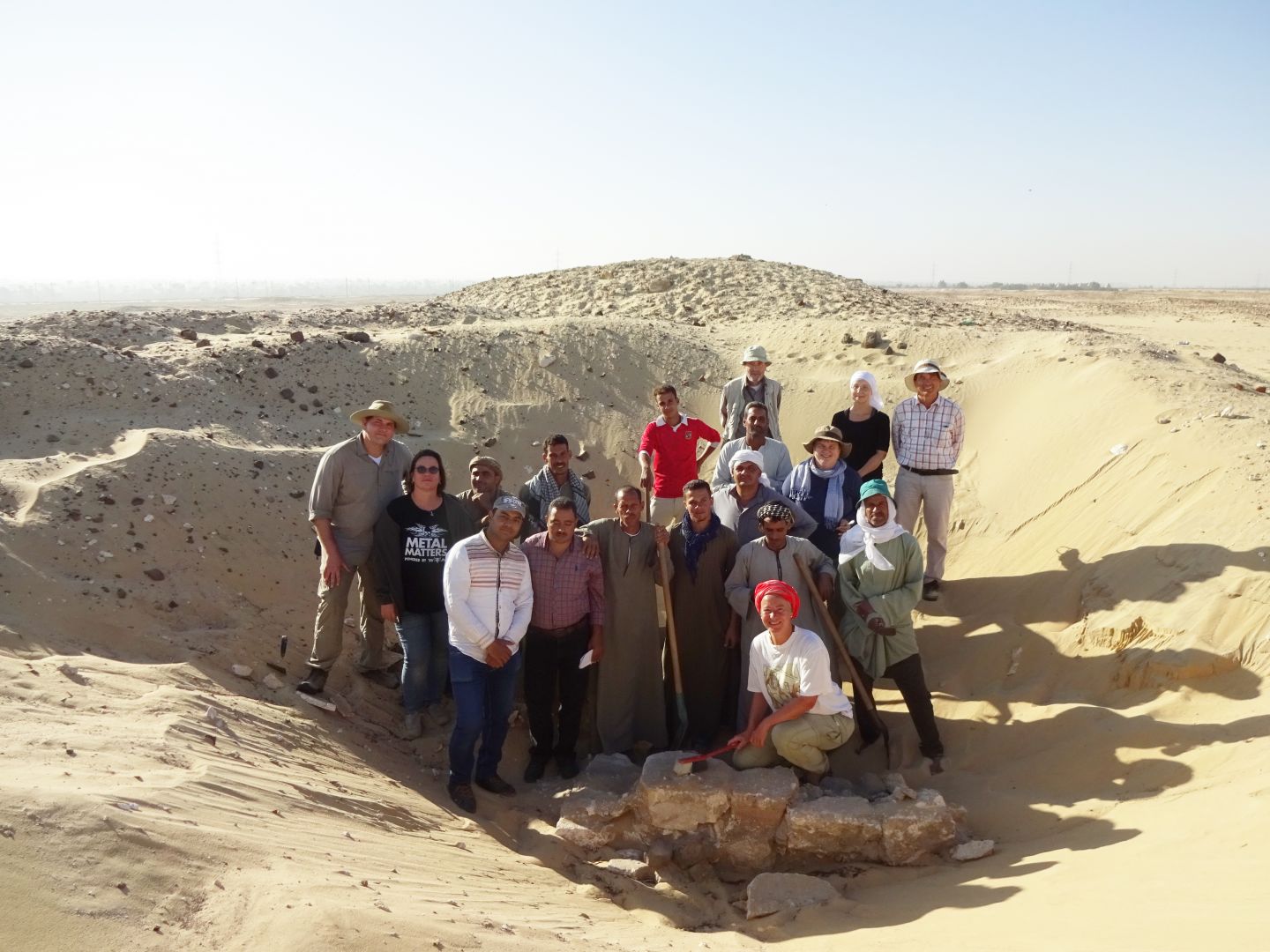
In March 2018 we started the first excavation and chose as the first site an area south of the tomb houses excavated by Sami Gabra. Here we discovered a building with a dome and a barrel vault.
In spring 2018 we held another field school as part of the “International Summer- and Field-School Program for Archaeology, Conservation and Restoration of Arts and Cultural Heritage” and is financially supported by the Volkswagen Stiftung, Germany. It is a cooperation project of the Ministry of Antiquities (MoA), Minya University, the State Museum of Lower Saxony Hanover/Germany and supported by the University of Applied Sciences HAWK in Hildesheim, Germany.
Protects against cross-site request forgery attacks.
Retention period: This cookie will only remain for the current browser session.
Saves the current PHP session.
Retention period: This cookie will only remain for the current browser session.
You can activate Google Translate to translate this website into many languages. A connection to an external server is established, and data is transmitted.
We use OpenStreetMap to show you the location. Data is sent to an external server to load the map.